
The Khalili Collection
Transportation
Between 2021 – 2023, Williams & Hill Limited moved between 10,000 and 15,000 objects from London to the client’s storage facility from the collections below:
https://www.khalilicollections.org/islamic-arts/
https://www.khalilicollections.org/all-collections/hajj-and-the-arts-of-pilgrimage/
Williams & Hill Limited project managed the move including bespoke crate fabrication, packing of objects on site, specialist transportation and provision of interim museum standard storage solutions.
About the Collections:
With holdings of more than 28,000 objects documenting the range of artistic production of the Islamic lands over a period of some 1,400 years, the two Collections now rank among the best in the world and represent a new generation of Islamic art collections.
The Islamic Art Collection includes an outstanding array of manuscripts of the Holy Qur’an and of illustrated manuscripts, and the coverage of the decorative arts – ceramics, textiles, glass, metalwork, as well as seals and coins – is comprehensive. A central place has been given to the art of calligraphy, which plays an essential role in the art of the Islamic world.
The holdings of manuscripts and folios of the Holy Qur’an are the first to have been assembled systematically to illustrate the whole history of Qur’an production, both in terms of time span and geographical range – from the 8th to the 20th centuries, and from Morocco to China. The result is a fascinating and diverse body of material, and one that is united by the honor paid by patrons, scribes and craftsmen to the Word of God as revealed to the Prophet Muhammad.
Similar sequences have been assembled for painting and the decorative arts. Masterpieces in painting from the Mongol period onwards include the 14th-century Compendium of Chronicles of Rashid al-Din; 10 folios from the Book of Kings made for Shah Tahmasp, ruler of Iran in the 16th century; two from the Life of the Prophet commissioned by the Ottoman sultan Murad III and completed in 1595; album paintings by the 17th-century master Mu’in Musavvir; and an extensively illustrated Books of Divination produced in the Deccan in the same period. Glass, ceramics and metalwork, for example, are represented in the full range of techniques from pre-Islamic period through to the 19th century. This mass of material is important in its own terms, but it also provides a visual context for the other items in the Collection.
Later Islamic art has not generally enjoyed the same level of attention as that of the 10th–16th centuries. Yet, the wealth of important objects and manuscripts from later periods in the Collection shows that much art worthy of our attention on aesthetic as well as historical and intellectual grounds was produced in the 17th, 18th and 19th centuries. The touchstone is again calligraphy, which reached a summit of excellence in 19th-century Istanbul that has hardly been matched in any other civilization. Another important art form of this period is Islamic lacquer, represented in the Collection by more than 500 examples. Through these works one can trace the history of this art from its definitive technical formulation in the late 15th century, through the great stylistic changes of the 17th century, until production all but ceased after the fall of the Qajar dynasty in 1924.
The Nasser D. Khalili Collection of Islamic Art is an unprecedented 27 volume series of which 25 are now published; together they form the most unique and extensive survey of the field. The General Editor is Dr Julian Raby, previously Lecturer at Oxford University and former Director of the Freer Gallery of Art and Arthur M Sackler Gallery, Smithsonian Institution, Washington D.C. Eminent academics and specialists from around the world have been commissioned to write the volumes.
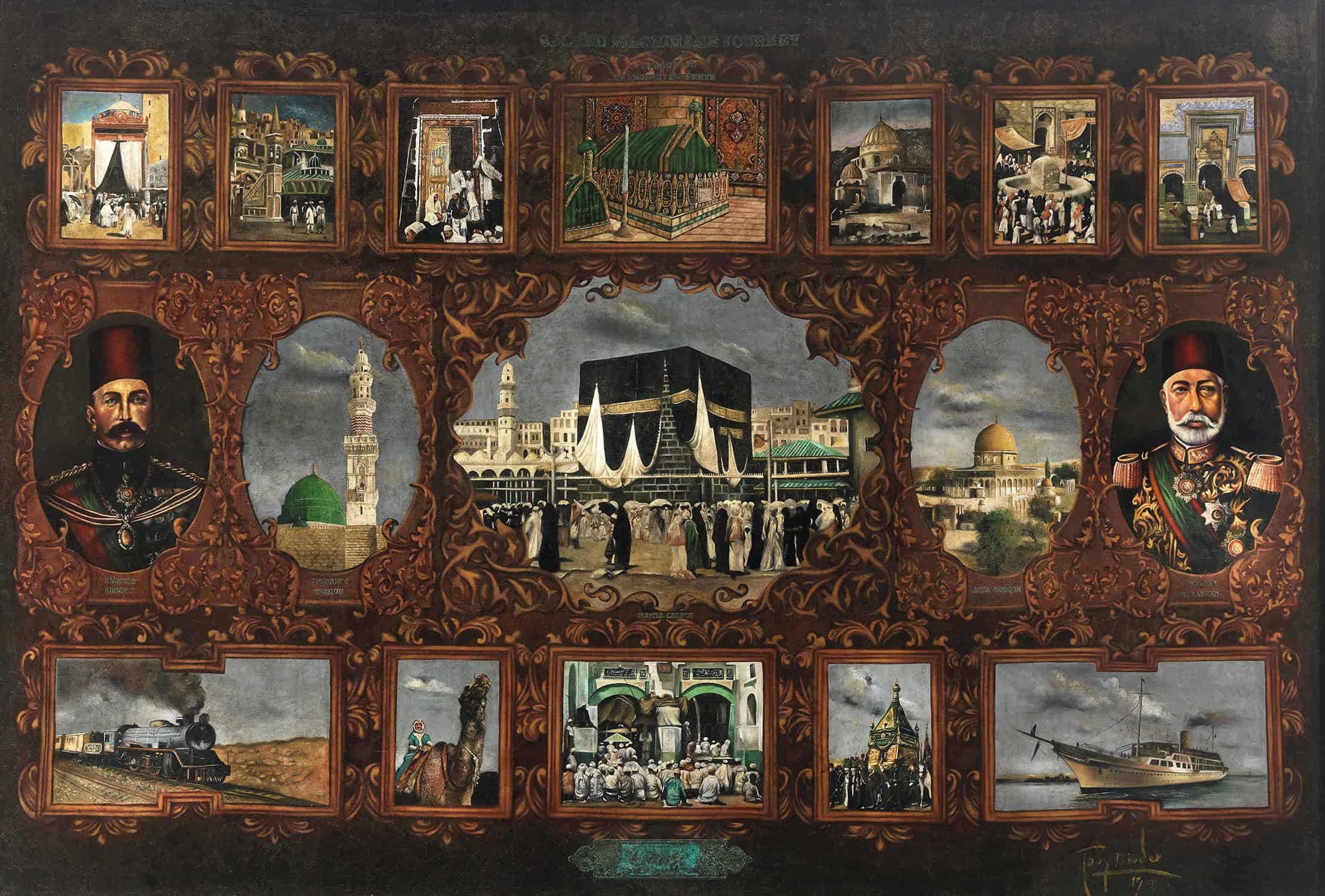
The Hajj and the Arts of Pilgrimage Collection includes one of the largest and most important groups of works relating to the Hajj and the arts associated with it. The collection is the largest in private hands and ranks as the most significant of its kind. The works range in date from the 7th to the late 20 century and come from across the entire Muslim world. They comprise textiles, manuscripts, paintings, rare printed books, historical documents, scientific instruments, coins, photographs, prints and postcards, illustrating the religious, artistic, and social dimensions of pilgrimage to Mecca and Medina, as well as the cosmopolitan nature of the Hajj across centuries. The collection has been thoroughly researched and catalogued, resulting in three major scholarly publications, including a multi-volume work authored by 25 of the world’s leading experts in the field and a nine-volume series offering a comprehensive insight into the entire collection.
We are pleased to have established a partnership with Williams & Hill, who support the day-to-day logistic needs of The Khalili Foundation. Their responsibilities include the careful management of artworks, secure interim storage and comprehensive support for exhibitions.
Their team operates with precision, sensitivity, and discretion, ensuring that all artwork handling and movements are undertaken with full respect for both the collection and the Foundation’s working environment.
We have complete confidence in the security and care of our works within Williams & Hill’s museum-grade storage facilities, while maintaining reliable access for exhibition loans and research purposes.
This is further enhanced by their exhibition support services, which encompass the preparation of necessary documents, coordination, and logistics, enabling each project to be delivered smoothly and to the highest standard.
A particular strength of this partnership is the dedicated team assigned to the Foundation. Their in-depth understanding of the collection, combined with a consistent, responsive, and highly personalised approach, allows them to operate as a seamless extension of our internal team.